How an Outdoor Kitchen in Wine Country Becomes the Room the Family Uses Most
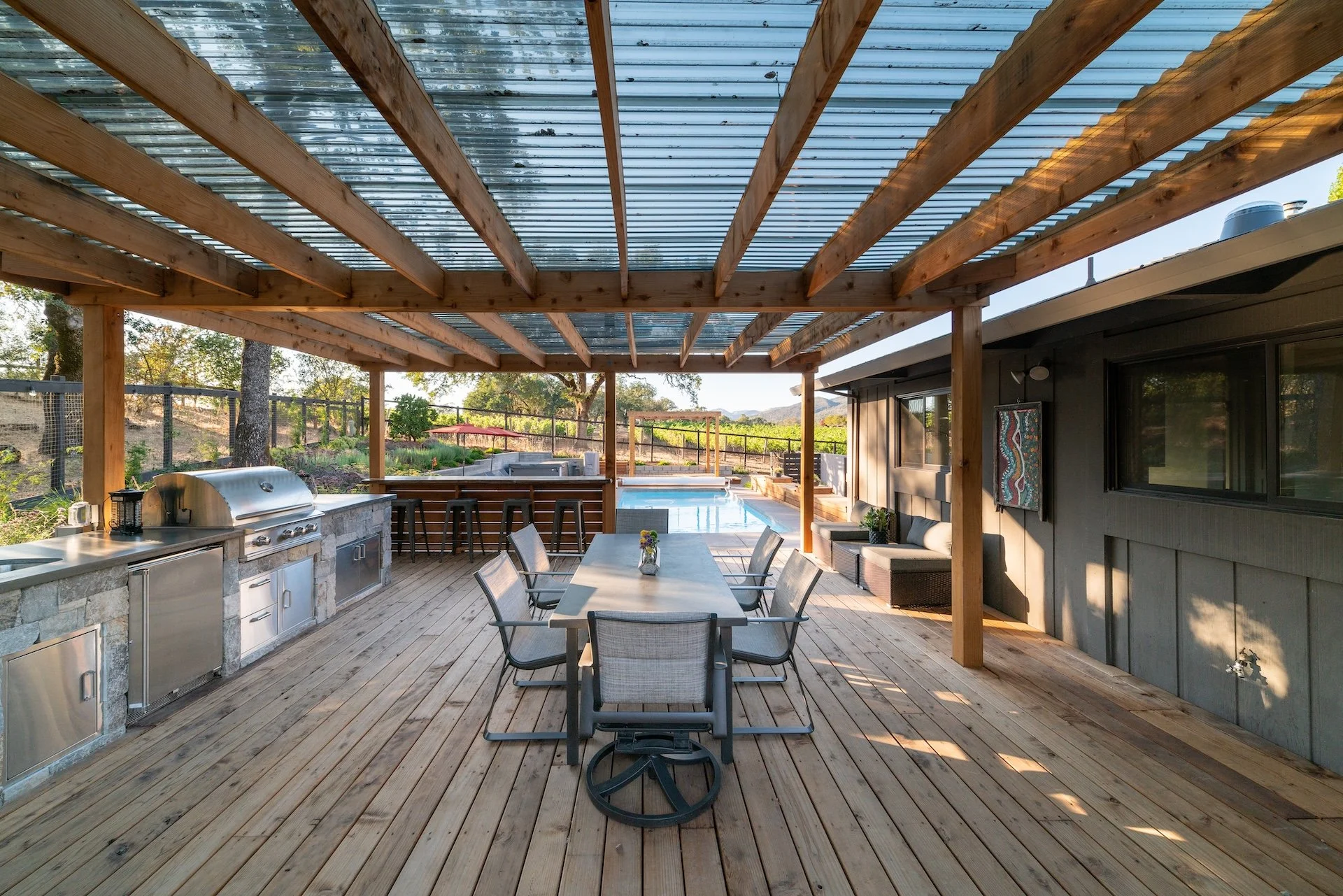
The indoor-outdoor lifestyle is not a marketing phrase in Sonoma County. It is the way people actually live. The kitchen door stays open from April through November. Dinner happens on the patio more often than the dining room. And the evening, which in this climate is temperate enough to enjoy without a jacket for seven months of the year, gravitates toward whichever space has the food, the drinks, and the fire.
An outdoor kitchen makes that space the backyard. The cook stays in the conversation. The prep happens outside. The food travels from the grill to the plate in three steps. And the evening, which used to split between the indoor kitchen and the outdoor table, happens entirely in one place.
What an Outdoor Kitchen Should Include
The difference between a grill on the patio and an outdoor kitchen is the infrastructure that makes it a real workspace.
A functional outdoor kitchen in this climate should include:
A cooking surface with enough capacity to handle the meals the family prepares, including the whole fish, the wood fired pizza, the grilled vegetables, and the multi course dinners that Sonoma County entertaining demands
Counter space for prep, plating, and serving, because the grill without counter space is just a grill standing on the patio
A sink with running water for rinsing, cleaning, and the convenience that eliminates the trips inside
Refrigeration for wine, produce, and ingredients that keeps everything at hand
Storage for utensils, oils, and accessories so the kitchen functions without carrying supplies from the house every evening
These elements turn a cooking station into a kitchen. The cook stays outside. The cleanup happens outside. And the evening never moves through the sliding door.
Related: Where Flavor Meets Warmth: Designing an Outdoor Kitchen & Outdoor Fireplace in Novato, CA
How the Climate Shapes the Design
Sonoma County's Mediterranean climate is generous to outdoor kitchens. The dry summers mean the kitchen sits exposed to minimal moisture for months at a time. The mild winters mean the freeze protection that colder markets require is largely unnecessary. And the moderate temperatures mean the cooking surface, the counter, and the surrounding materials are comfortable to use during almost every month of the year.
The design considerations specific to this region center on sun management and fire safety. The western exposure delivers intense afternoon sun from May through September, and the cooking area should be shaded by a pergola, an arbor, or the home's extended roof line to keep the space comfortable during the hours when the sun is most direct. And in a region where wildfire risk shapes every outdoor decision, the materials should be noncombustible and the cooking equipment should include spark containment appropriate for the defensible space requirements of the property.
The material palette should complement the wine country aesthetic. Natural stone, stucco, concrete, and weathered wood accents all belong in this landscape. The kitchen should feel like it grew out of the property rather than being dropped onto it.
The Kitchen That Earns Every Evening
On a Thursday in September, the sun drops behind the hills, the air cools to something perfect, and dinner is happening outside because the kitchen is there, ready, and easier to use than the one inside. That is the return. If your property in Sonoma County is ready for a kitchen that matches the way you already live, the design conversation is where the evening begins.
Related: 5 Ways Landscaping and a Beautiful Patio Can Revamp Your Petaluma, CA Outdoor Space