
Retaining Wall Contractor in Sonoma, CA: The Questions to Settle Before the Wall Goes In
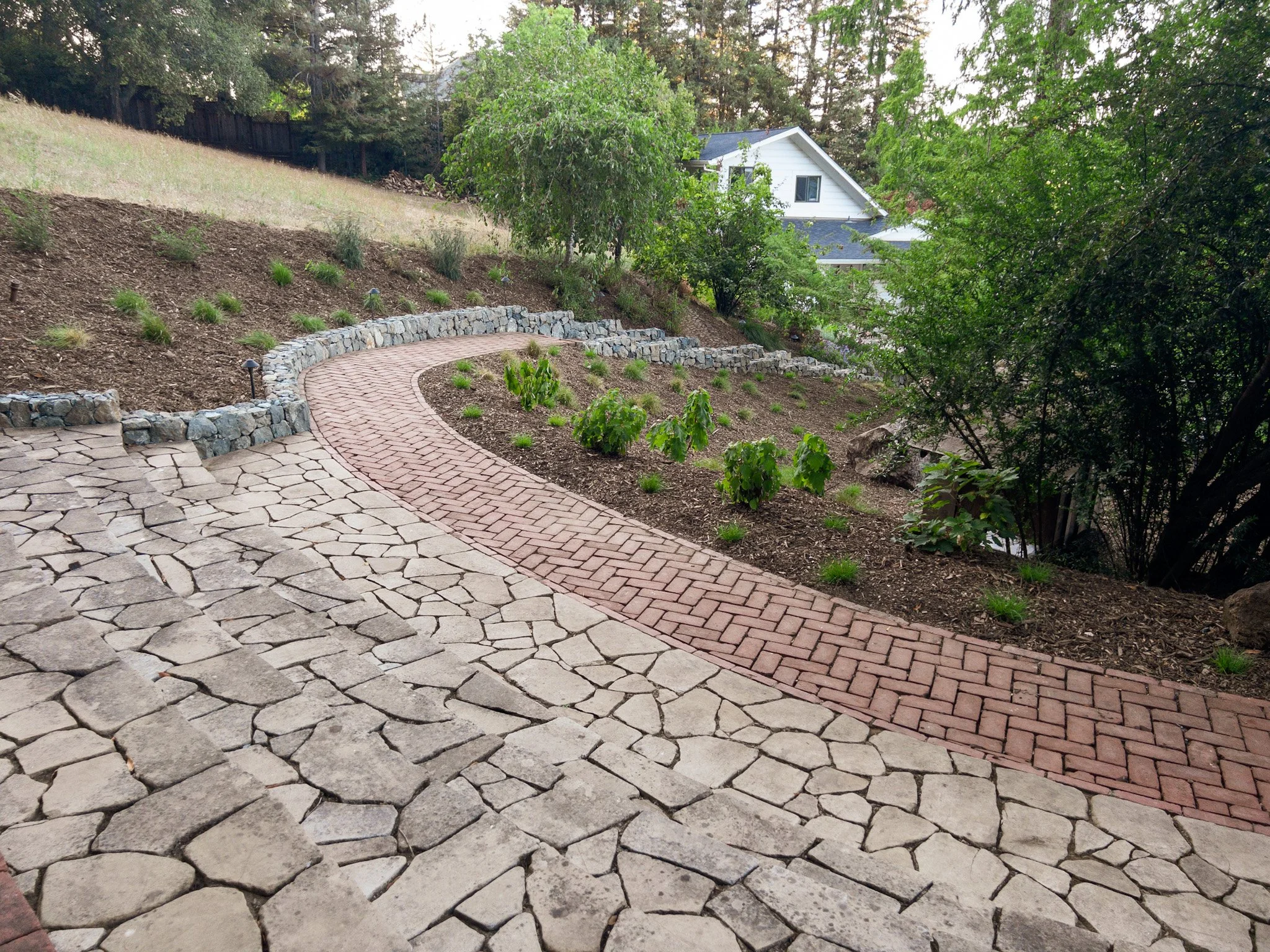
Hillside lots are the reason most people start looking for a retaining wall contractor in Sonoma, CA.
The usable part of the property is smaller than the property, and a wall is what converts slope into ground you can actually stand on. The decisions that determine whether that works are made before anything is stacked.
BayTerra has more than 15 years of experience designing and building landscapes across Sonoma, Napa and Marin Counties, with an in-house horticulturist and certified irrigation technicians on the team.
Walls rarely arrive as a standalone request. They come attached to a patio, a drive or a planting plan that has to work above and below them.
Related: What Makes a Retaining Wall Work in Sonoma, CA's Climate and Terrain
What Is a Retaining Wall in Sonoma, CA Actually Holding Back?
The first question to settle is what the wall retains: how much soil, what kind, and what sits above it. A wall holding back two feet of garden soil is a different structure from one holding back eight feet of hillside with a driveway above it.
Soil type, the slope above the wall, and whether anything will be parked or built on the upper level all change the design.
On wine country ground that swings between saturated winters and bone-dry summers, the soil also behaves differently in February than it does in August.
Where Does the Water Go Behind a Retaining Wall?
Water behind a retaining wall needs a planned route out: drainage aggregate behind the face, a collection line at the base, and an outlet that discharges somewhere useful rather than into the next problem downhill.
Poor drainage is a leading cause of wall failure, and it is invisible once the job is finished. Water collecting behind a wall adds pressure the wall was not designed to carry.
Ask any contractor to describe that route end to end. If the answer stops at the aggregate, the plan is incomplete.
At What Height Does a Retaining Wall in Sonoma, CA Need Engineering?
The height at which a retaining wall needs engineered drawings and a permit is set by the local jurisdiction, and it changes with what sits above the wall. The answer comes from the jurisdiction rather than a rule of thumb.
What matters practically is that somebody establishes it early. Discovering a permit requirement after excavation has started is a schedule problem and occasionally a redesign.
Related: Why Landscape Design in Sonoma County Starts With the Land
Should a Sloped Lot Get One Retaining Wall or a Series of Terraces?
On a steep Sonoma lot, a series of terraces usually gives back more usable ground than one tall wall. Terracing splits the load across shorter structures and produces more planted ground, while a single tall face tends to read as a barrier.
The trade-off is footprint, since each terrace needs room for its own base and drainage. Even so, the terraced version is often the one that gives back a garden rather than a retaining feature.
What Happens to the Ground Above and Below a Retaining Wall?
A retaining wall changes how water moves through the ground on both sides of it, so irrigation, planting and access all need revisiting. The upper terrace usually drains faster than it did before, and the area at the base often receives water it did not receive previously.
Our retaining and seating walls are designed alongside the planting and irrigation rather than ahead of them. The wall sets the conditions those systems have to work in.
How Should Retaining Wall Proposals Be Compared?
Compare retaining wall proposals on excavation depth, base preparation, drainage detail and backfill material across every bid you receive.
Those four items account for most of the real difference between quotes that look similar at the bottom. A wall that is priced noticeably lower is usually lighter in exactly those four places.
Turn Your Slope Into Usable Ground With a Sonoma Retaining Wall Contractor
A retaining wall is a structural decision that happens to be visible, which is why it is worth resolving the drainage and the grade before the look.
BayTerra designs and builds retaining and seating walls across Sonoma County and into Napa and Marin, and we start by walking the slope with you.
In Summary
How long does a retaining wall take to build in Sonoma, CA?
A small garden retaining wall in Sonoma, CA is often finished inside a week. Taller walls that need engineered drawings, permits and deeper excavation can run several weeks, with the approval timeline rather than the construction usually setting the start date.
Can a retaining wall be built during the rainy season?
BayTerra can build a retaining wall during the rainy season, though excavation and compaction both go better in drier ground. On hillside sites, we often schedule the excavation and drainage work outside the wettest stretch and carry on with the visible work afterward.
What are the early signs an existing retaining wall is failing?
The early signs of a failing retaining wall are leaning or bulging in the face, courses separating at the top, water seeping through the face after rain, or cracking in the surface directly above it. All four usually point back to drainage rather than to the wall material.
